This day’s portion

❦ ❡ ☞

URLs

I changed TDP’s URL structure. Apologies for any confusion, although I suspect the number of RSS subscribers is somewhat low. Why? URL structures should reflect site hierarchy, and before I went with Jekyll’s default, which includes the month and date, even though there are no month and date archives. The site is flat, and the URLs now reflect that (i.e. https://www.thisdaysportion.xyz/post-title/ rather than https://www.thisdaysportion.xyz/YYYY/MM/post-title/).
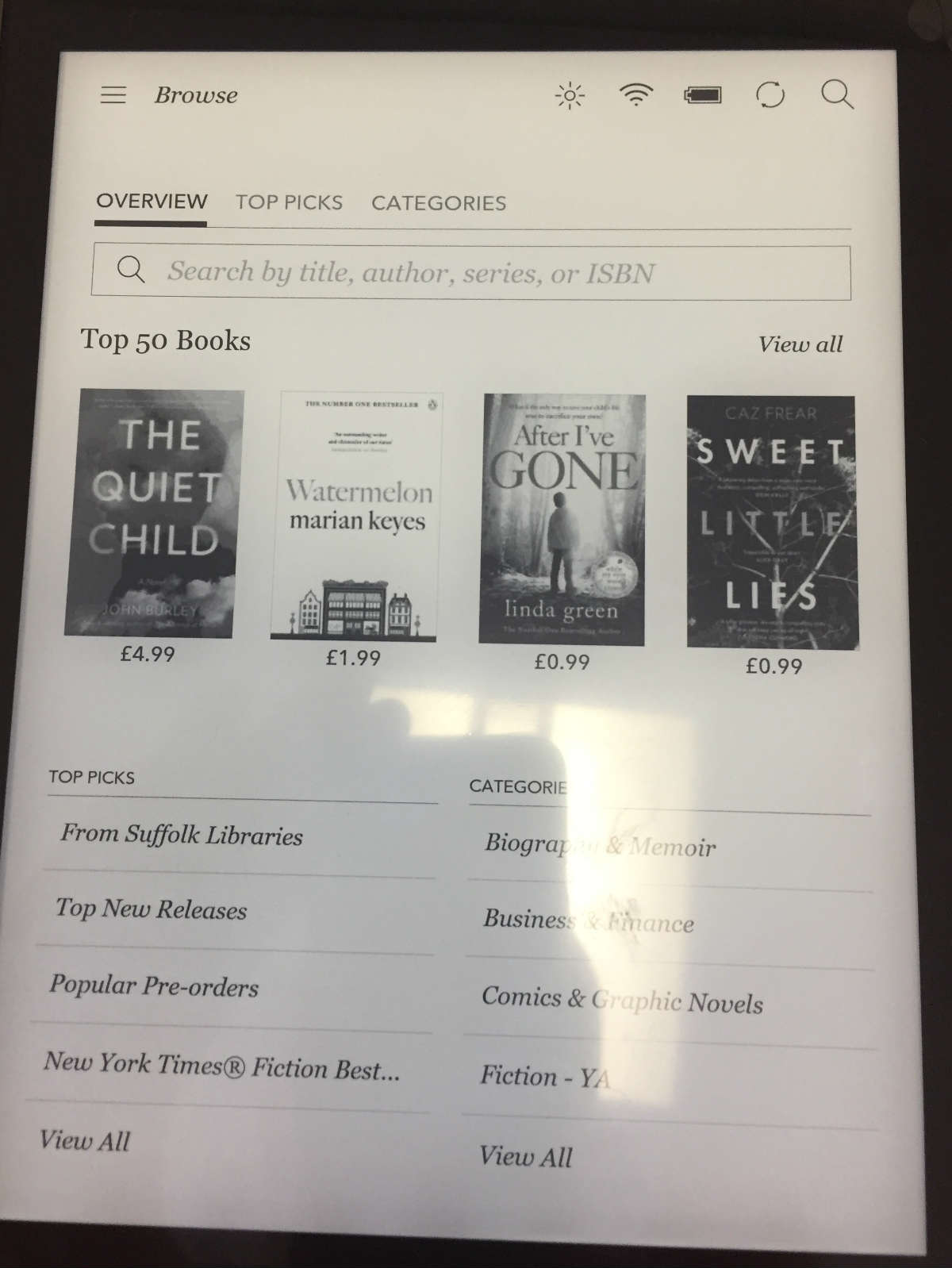

Kobo Aura One

The Kobo Aura One ereader home page

This is quite an interesting new ereader from Kobo as it integrates directly with Overdrive, a service that allows you to borrow ebooks from libraries for a limited time. Before, you’d have to use an app and/or the horror of Adobe Digital Editions to get the books onto your device. This removes a lot of friction. – But what I’m really interested in is removing the barrier between library website and catalogue. This is what a library website home page should look like.

Subculture, Mark E Smith

I use different methods to write - at the moment I am getting up at 6 am and writing until 9 am. Writing notes down straight from sleep, what’s in your dreams - just when it is clear in your head. The meaning is getting clearer now. An old way of writing I am coming back to.

Fred Perry MES interview

The glamour of Manchester

An art deco monochrome postcard that says 'The glamour of Manchester'

Meaning, semantics, separation, utility, repetition

Well worth reading CSS Utility Classes and “Separation of Concerns”; it’s excellent (and thorough) on why utility CSS (e.g. Tachyons) is the sanest, most “semantic” approach to CSS, and why it’s not the same as inline styles. Only bit I’d question is its approach to repeatable blocks of code. Wathan suggests adding classes like btn-purple​; instead, use includes and variables to generate HTML with utility classes. In Jekyll you’d use something like include button.html bg=purple text=white to generate a class="bg-purple white"

Home · Feed · </>

The journal of Leon Paternoster.